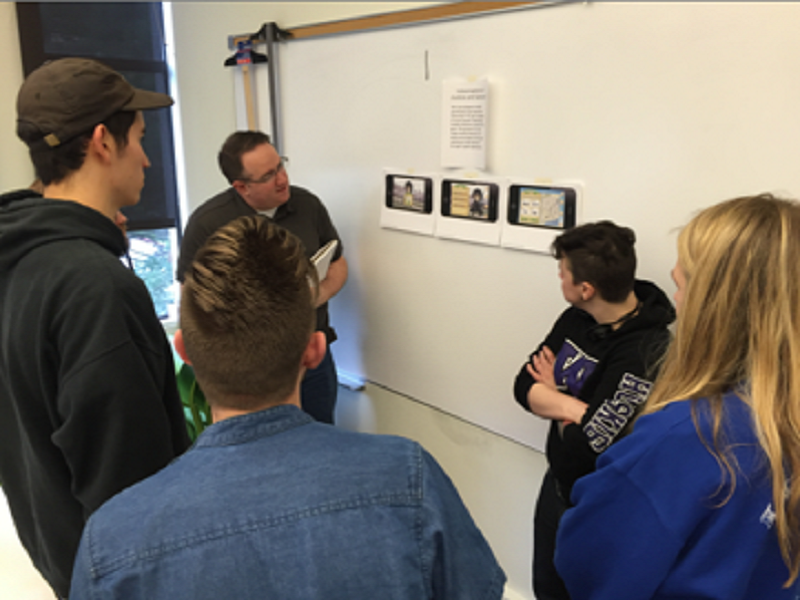
Problem Space
As a quarter long project, my team designed and conducted user research on a health gamification app. It was designed using a science fiction/fantasy world over an augmented reality display, with the emphasis on getting normally sedentary users up and moving. This focus of this project was just on the design and research phases, so no coding work was done.
There were three primary constraints placed on my team with this project, however outside of these constraints we were given near total autonomy in the concept and nature of our project.
- We were limited to 10 weeks of work with an inflexible schedule.
- We were given a proscribed set of steps and tasks to follow.
- The focus felt uncomfortably narrow. More on this later.
Because the project was a game over reality, the working name of the project was "Not Quite Real."
The Team
Our team consisted of Cole Lundell, Ben Luster, and me. Only artifacts that I worked on directly are presented in the images below.
Discovery
At the start of the project, we first considered the goals of our app and the screens that will be needed. This was primarily done using our own experience playing video games combined with the health goals. A list of needed screens was created, and used again in wireframing and a site map.
To lay the groundwork for our project, we first needed to examine current or potential competitors, as well as gather information on our users.
Competitive Analysis
The first few weeks of the project was spent gathering information and a "state of the art" review of similar apps on the market currently. We realized that our biggest competitors, should this product go to development, would be a cross-section of Pokemon Go and Zombies, Run! players.
Pokemon Go focused exclusively on augmented reality with the added benefit of movement, while Zombies, Run! focused more on the health component with a story added. Several other apps were in development viewed as potentially competitive, but have still not been released.
Persona Development
We conducted a wide-ranging survey to obtain information on our potential, resulting in five times the number of responses required. From our research we conducted a card-sorting exercise, and build a persona to use going forward.
Our user is a woman in her mid-twenties who works in IT. She is married with no children and has a mostly sedentary job. Her goal is weight loss for personal reasons, and has no movement or motor disabilities.

Design
Using the research conducted during our Discovery phase, we began to sketch, develop a sitemap, and finalize wireframes.
Sketching and Preliminary Designs
The wireframes and site map informed low fidelity screen designs, which were presented to other teams for critiques. The best designs recreated in higher fidelity by a team-member (link to her personal profile). The images presented below are my own early sketches.


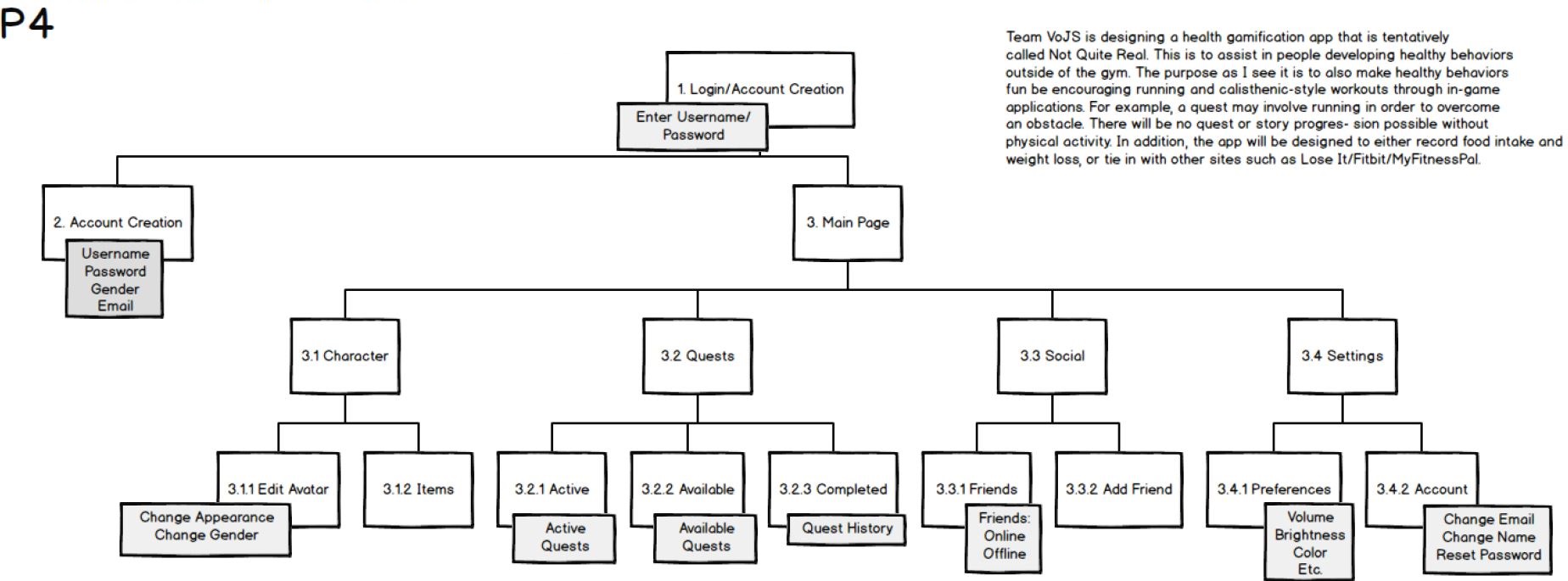
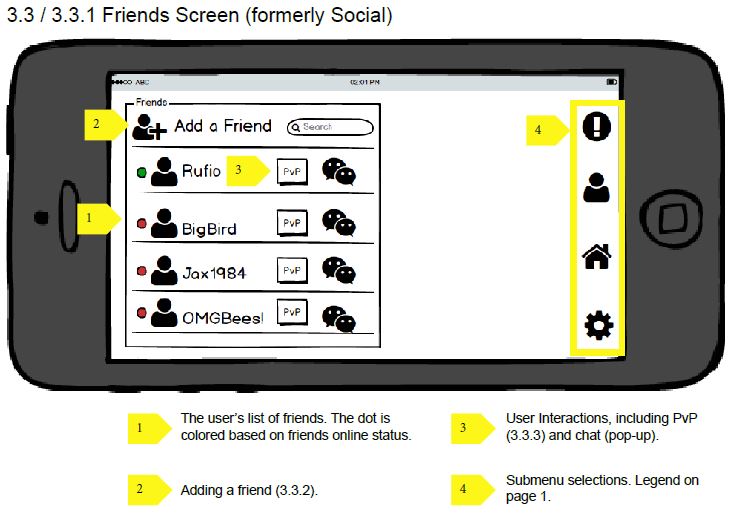
Wireframes and Sitemap
Looking at the screens we would need, we created a preliminary site map and wireframes. This is where the scope of our project began to creep beyond what we could complete in our time-frame. We worked to pull back the scope of the project to a level where we would be satisfied with the final product while leaving room for future expansion.
Mock-ups
The higher fidelity, but not final, mock-ups were presented for the full class to view and provide feedback. Feedback was near universally positive, with the negative feedback primarily from non-gamers curious about why this would be effective.
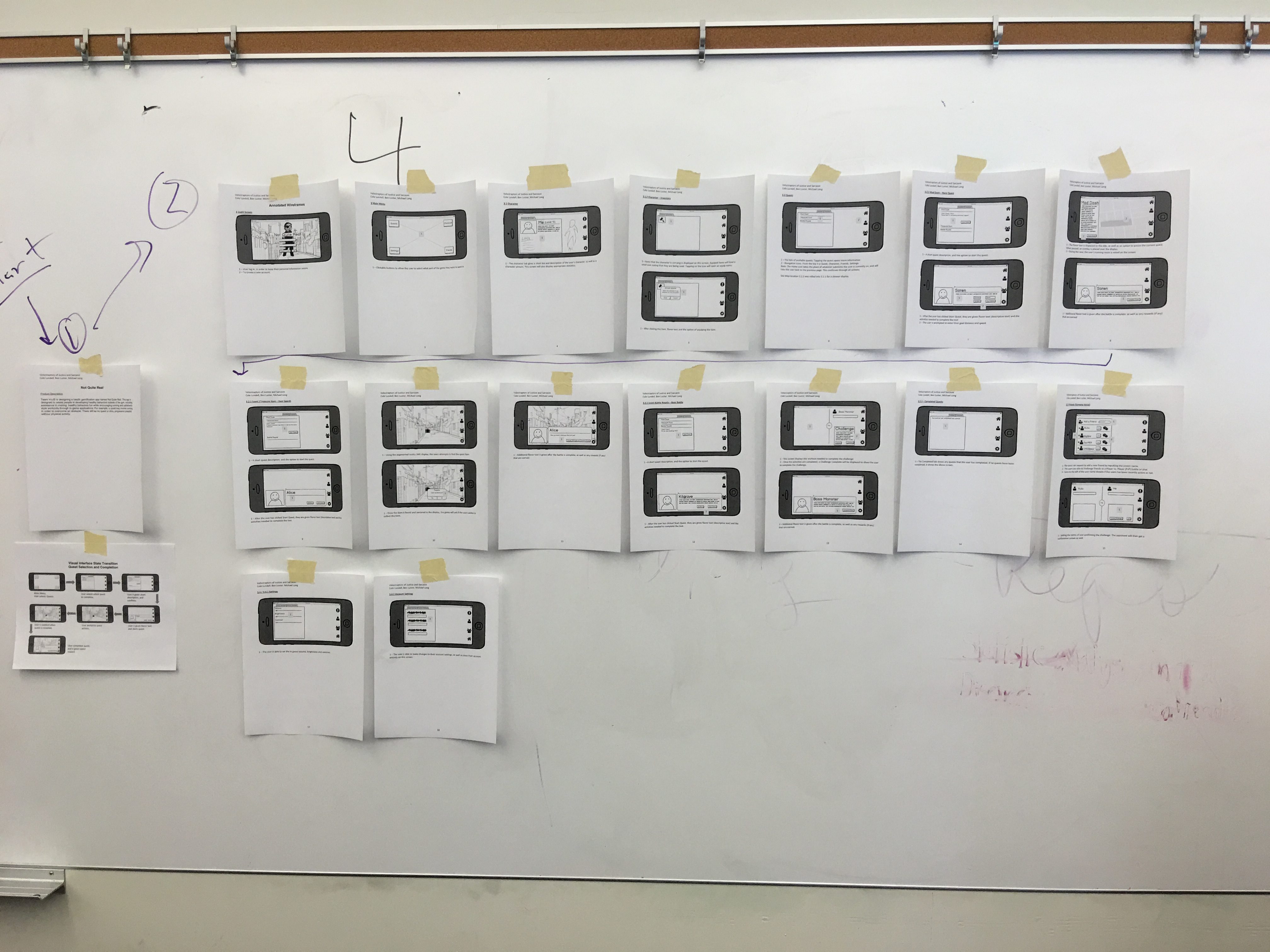
Validation
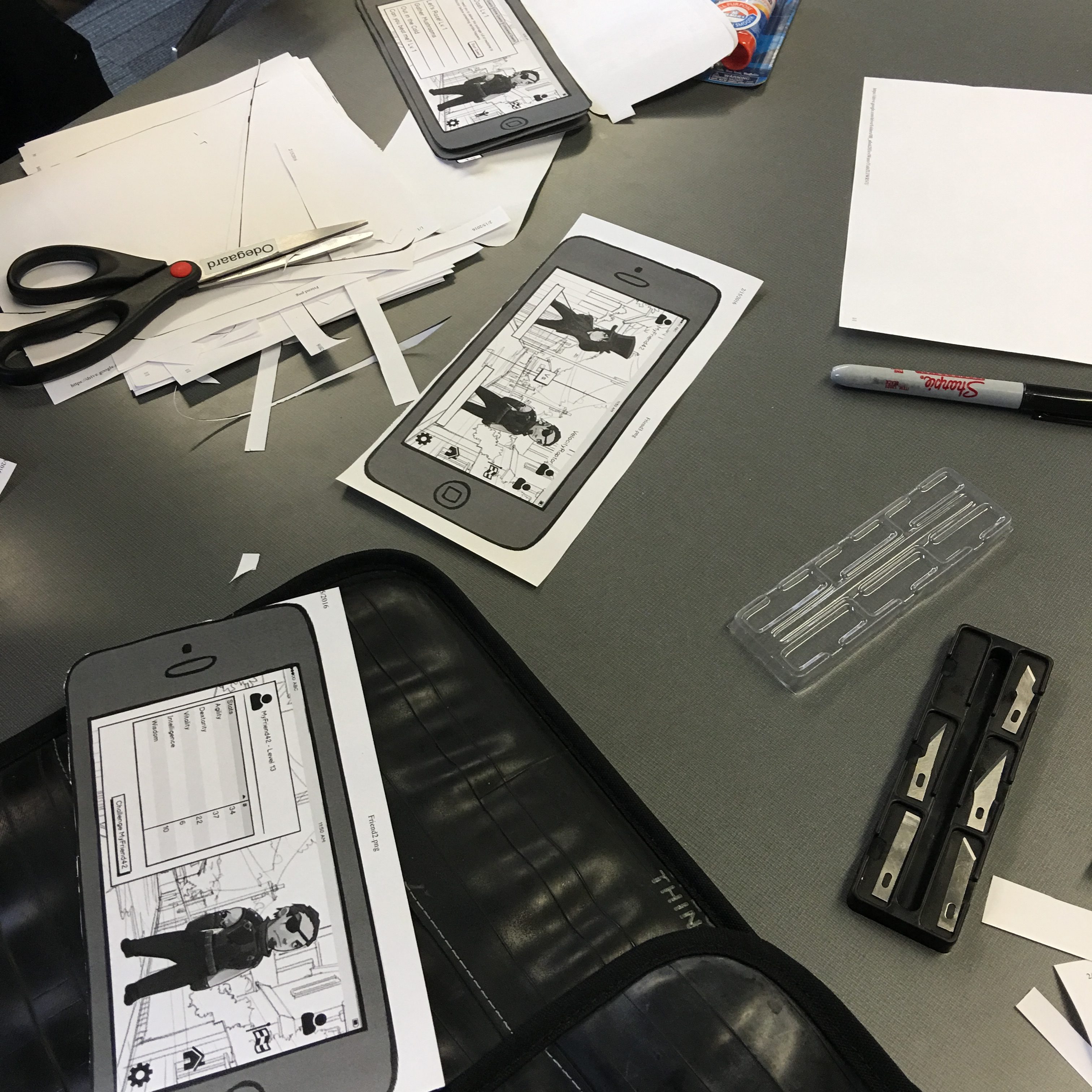
The sole method allowed for validation on this project was a paper prototype. As all three of the team members were iPhone users, we used that model to build a flip-book for testing. This flip-book allowed the user to view all pages from our Wireframes,
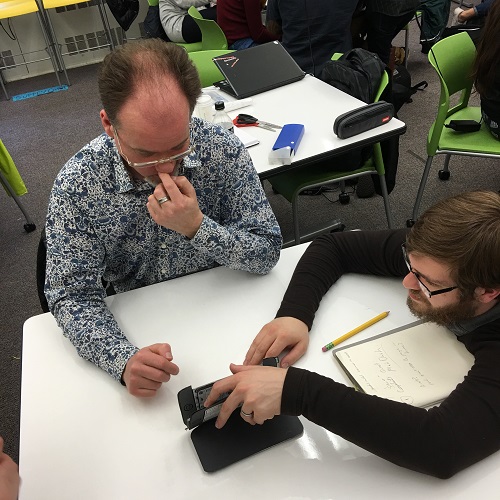
This paper prototype was tested using three scenarios tests by three different users. Two of the users completed each scenario within minimal difficult, while the third - who was not a video game player - took longer. We determined from this that a brief on-boarding for newer gamers would be beneficial.
Delivery
The deliverables included in the final stage were all previous steps in a report. as well as a project summary, team evaluations, and a "room for growth" self evaluation.
This course itself culminated in a final presentation to the instructor, class, and representatives from BlinkUX and Amazon. The project was positively received, resulting in a high grade in the course and compliments from the guest observers.