Problem Space
Graduation from many majors at the University of Washington requires a capstone course. This provides the opportunity for students to develop a project from concept to completion that expresses everything learned over the length of the program. This was done over two quarters, with the first as a planning quarter and the second as working more closely with our team mentors.
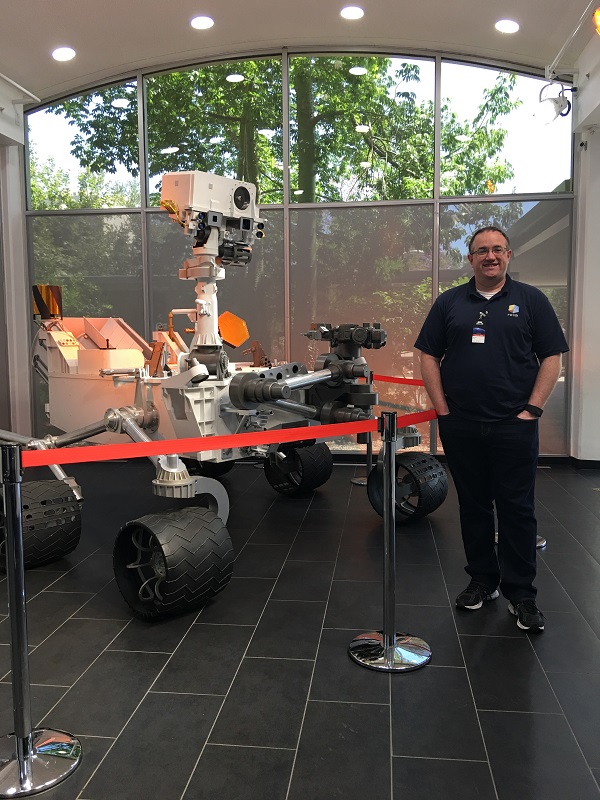
The sponsor for my team was NASA Jet Propulsion Laboratory's OpsLab, who selected our team to design an interface for working with the next generation of Mars rover. This nature of this interface was left open, and we could decide whether the interface was designed for engineers, scientists of both. We ultimately decided to focus more on the engineers and drivers, but to not ignore the needs of the scientists.
Our mentors were Nat (software engineer) and Marijke (designer for OnSight), and they were located at the JPL headquarters in Pasadena, CA. Because of this, all communication was through video call and email.
Each team member was responsible for leading one of the phases, and contributing to the overall project during all phases. I was the leader during the Discovery phase, as well as the overall project coordinator. As coordinator I set up interviews, made sure we had needed resources, scheduled meetings with our mentors, and handle general logistics.
We dubbed our project roVR as a play on rover and VR (virtual reality).
Constraints
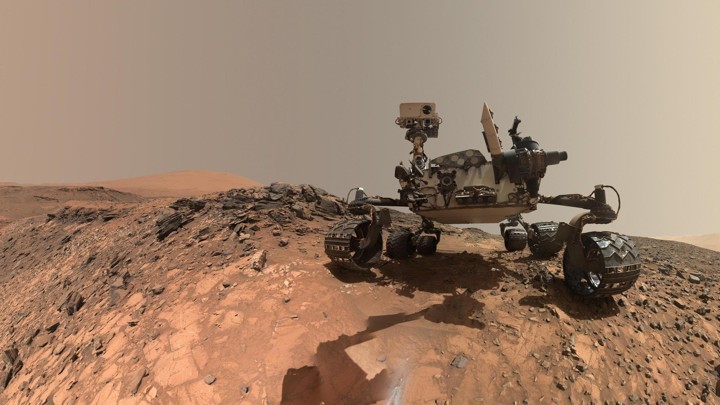
Giving the rover commands took up to three days. The first day was designing and transmitting the commands, the second was a null day where the rover executed the commands, and the third was receiving the feedback from the commands. With a normal expectation of immediate responses, this was by far our largest constraint.
Specific systems on the Martial rovers were classified for various reasons. Because of this, we were unable to see or find out anything specific about their current systems that were outside of the public domains. This did allow us more creative freedom, and for us to work without preconceptions.
Because this was an academic project, there were specific components we were required to complete that might otherwise not have been a part of a professional project.
Discovery
During discovery phase I was the overall project manager, and we started several weeks before the instructor scheduled the start. This was to give the team a chance to learn as much as possible about the Martian rover interfaces.
Neither of our mentors were designers for the Mars rovers, but both were experienced in the JPL mindset and provided an exceptional background knowledge on the expectations of engineers and scientists. This information was supplemented by a more in depth literature review.
Literature Review
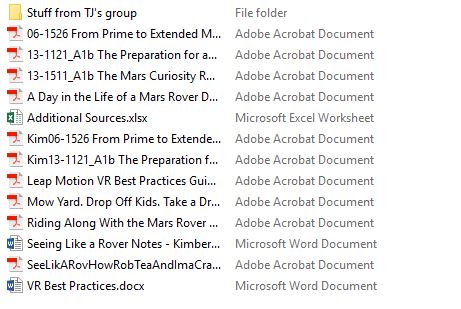
Each team member read at least twenty articles or papers on rover interfaces with topics ranging from general UX best practices to the limitations of designing with a severe time lag. Because of projects classified nature, roughly a third of these articles were more "pop culture" and anecdotal in nature.
Interview Protocol
From the information from our mentors and literature review, combined with our user experience knowledge, I wrote a research protocol of nine questions, not including follow-up questions if needed. This protocol was discussed as a team with minimal changes, and then again to our mentors with minimal changes.
I conducted interviews with an engineer, a designer, and members of Team Hakuto. Team Hakuto was the winner of the Google XPRIZE for mobility, and are working on a lunar rover.
The other team members worked in tandem to take copious notes and provide follow-up questions.
Interview Synthesis
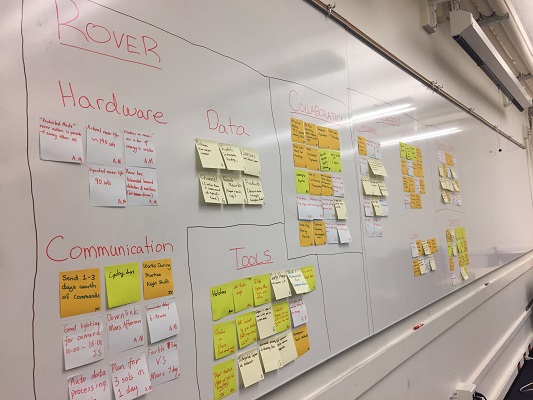
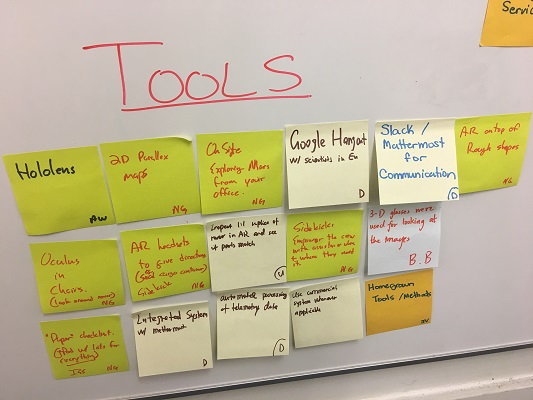
From our general knowledge, literature review, and interviews we built an affinity diagram and pulled three key results.
- The time constraint is one of the biggest factors in any design process. The decision cycle is five hours, meaning that decisions are often being made while data is still being received from the rover. Allowing the engineers and scientists to access information quickly is paramount.
- The size of teams working with the rover, and the number of competing priorities, means that designing with collaboration in mind is a close second to the time constraint.
- Different teams want or need different interfaces. Engineers and drivers need topological data that atmospheric scientists might not. In particular, geologists prefer as minimal a display as possible. Customization should be considered.
Design
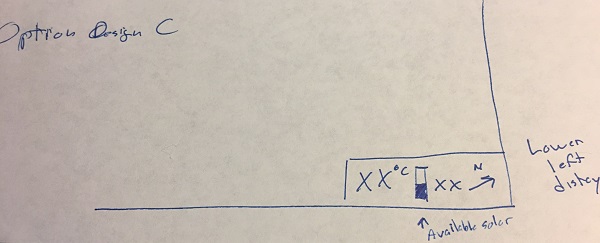
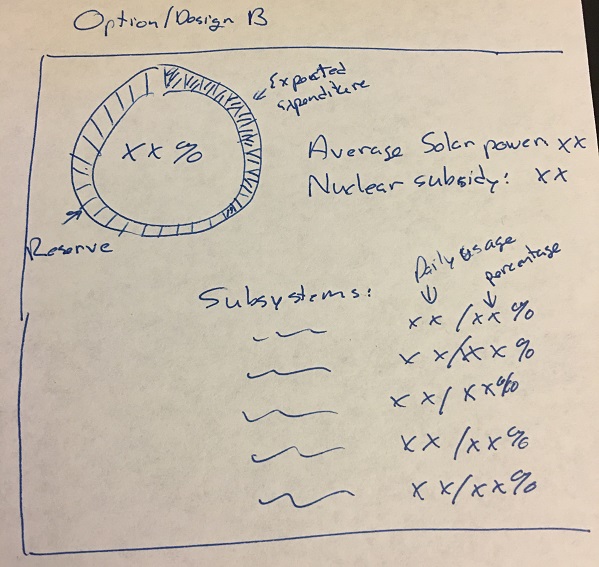
As as designer, I assisted in developing storyboards, user stories, and sketches of potential designs. Each step built upon what was learned and developed in the previous step.
Sketching
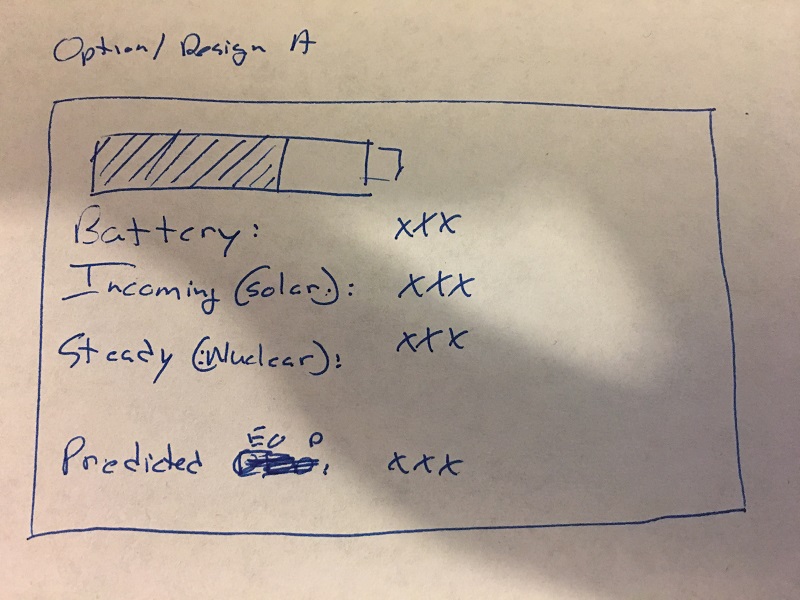
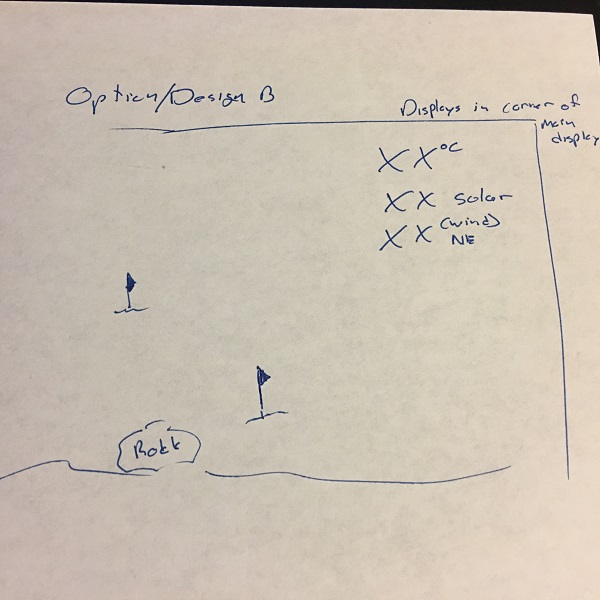
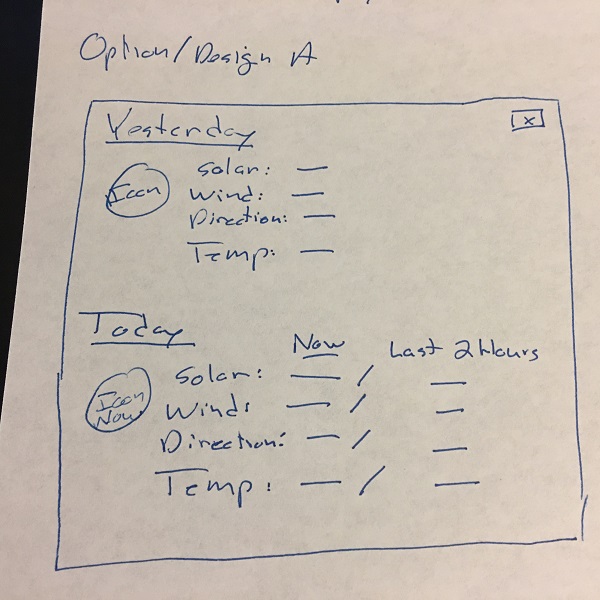
Using our research and persona, we conducted a number of sketches with our initial designs. It was during the sketching process and the feedback I received that the team fully learned that designing for 2D and for 3D involve very different skills. This knowledge was expressed more in our Validation and Delivery phases.
Personas
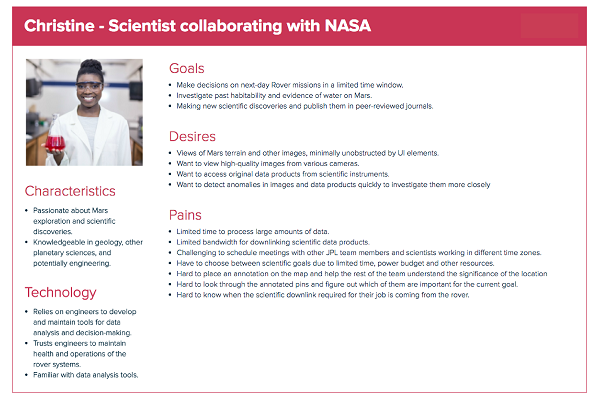
Using what we learned from our research and interviews, we developed two personas. One, Christine, was a scientist working with the Martian rover and the other, Ahn, as an engineer/rover driver.
Context Scenarios
From our potential users' predicted behaviors we examined their problems and expectations. We developed five high level situations to give us the context needed for our final project.
Feature Requirements
From our context scenarios we looked for features to include in our final deliverable. The features we discussed included:
- Command sequence integration - looking at how the rover would interact with the environment.
- Rover intervals - looking at the duration where the rover could be given commands, and the rover components.
- Power - monitoring the power levels of the rover, and the heat levels involved.
- Temperature and weather - the environment around the rover, and how it will impactwith the system.
- Rocks & pits - the environment around the how, and how the rover will conduct experiments on it.
Validation
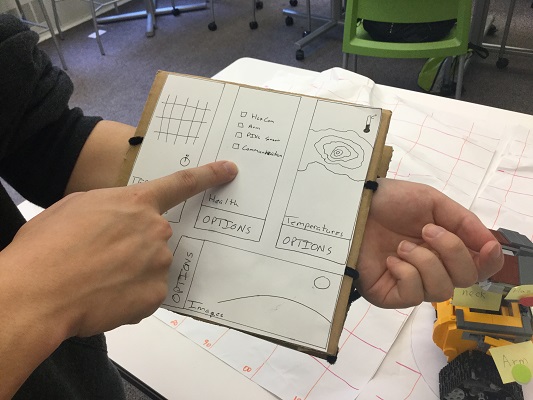
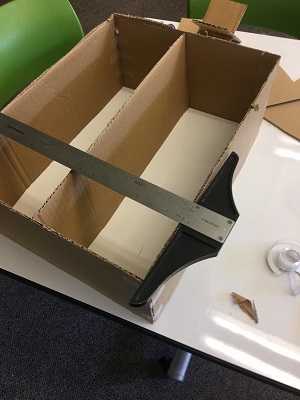
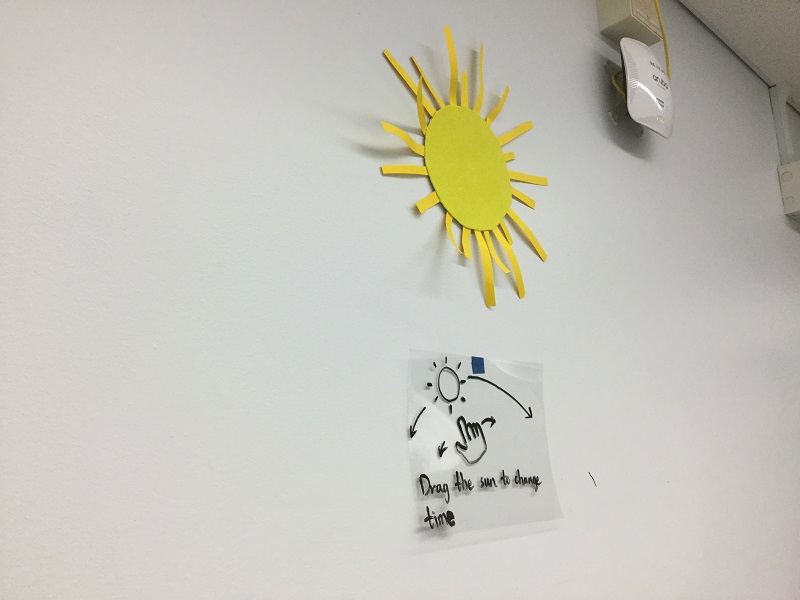
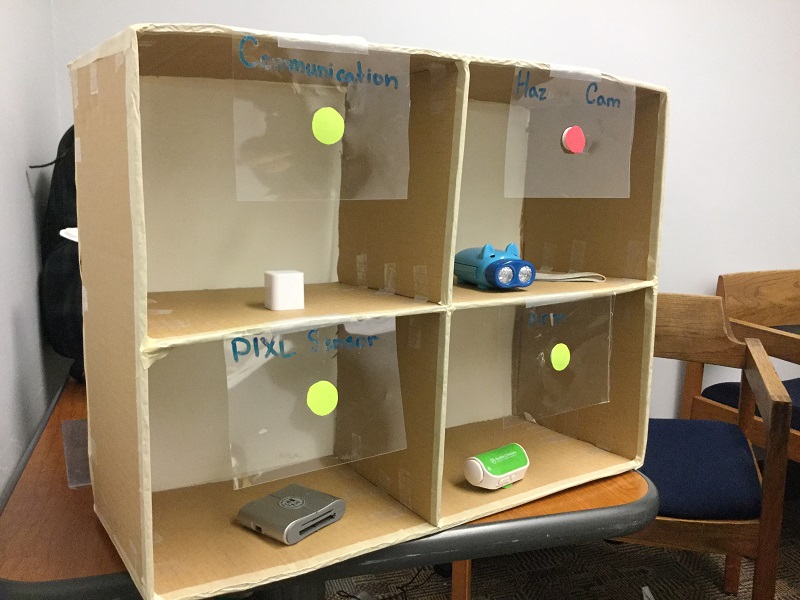
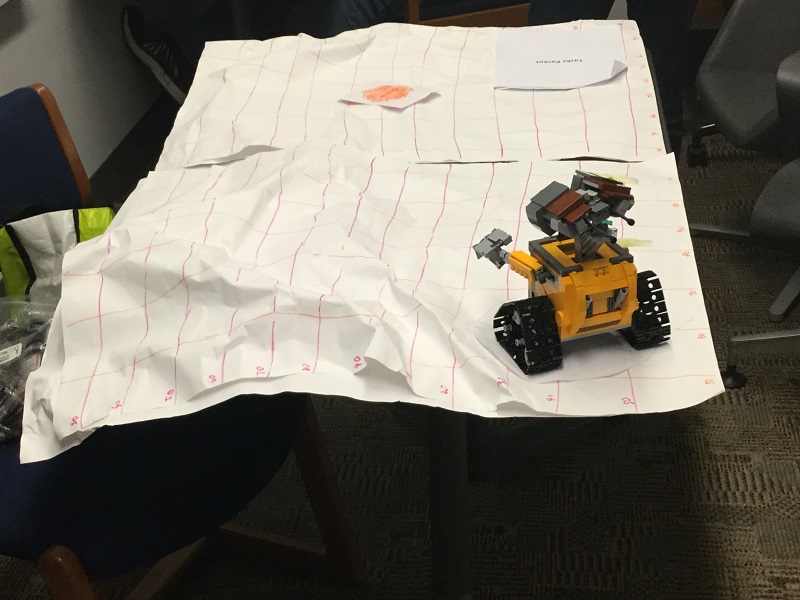
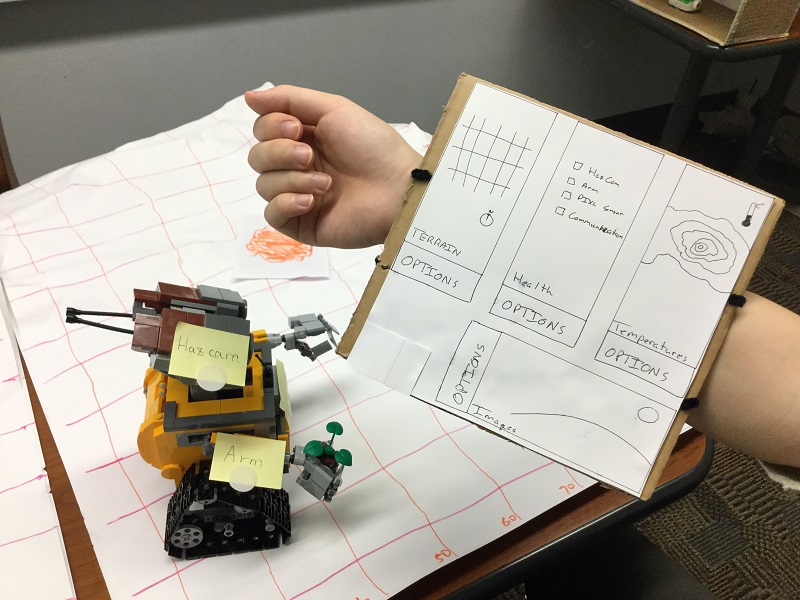
For the Validation phase the team created a room-sized low fidelity prototype. This paper prototype was set up in one of the study rooms on campus, with interactions on the walls, side tables, and on the user's wrist.
Three users were brought in to test our prototype, and were given five tasks to complete using the interactions. They were then asked several questions afterwards; these questions were designed to gauge how they felt the system was to use, and ways to improve.
What was learned from our tests was used going into the final deliverable, and in recommendations given to our mentors for their own work.

Delivery
Our delivery stage includes both virtual reality final prototype and a video demonstrating how the prototype works and feels. Capturing screens in the prototype was surprisingly challenging, and I encourage you to watch the video for a better feel.
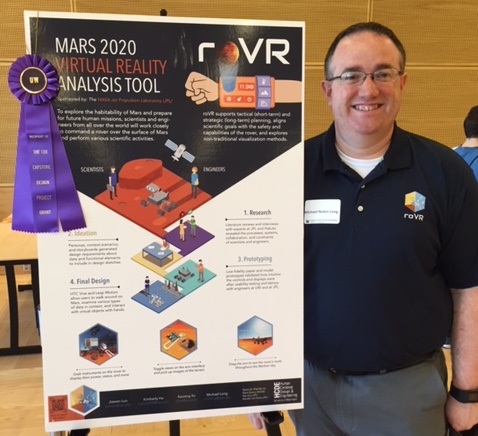
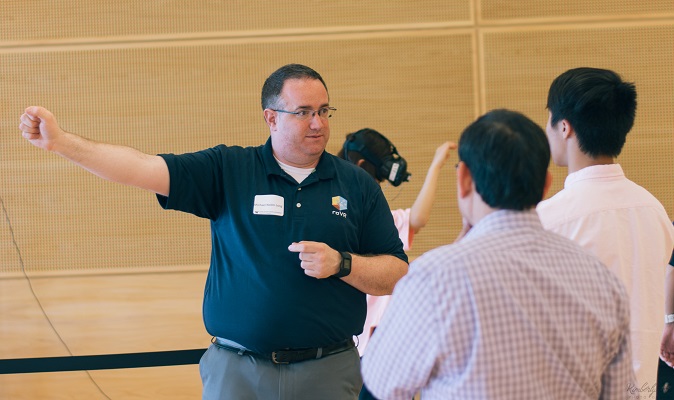
Both the experience and video were demonstrated at the HCDE Open House, where we were two votes shy of the People's Choice Award. During the open house I was the primary speaker, and introduced our design and prototype to attendees as they came to our booth.
Virtual Reality Prototype
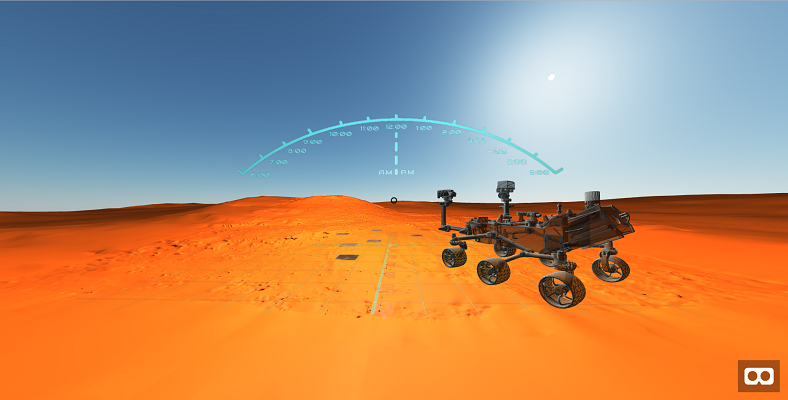
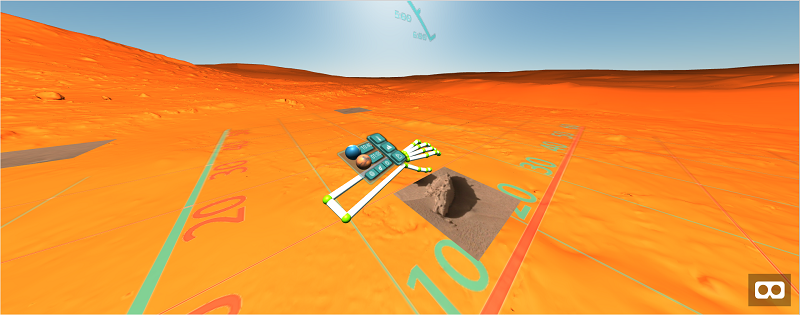
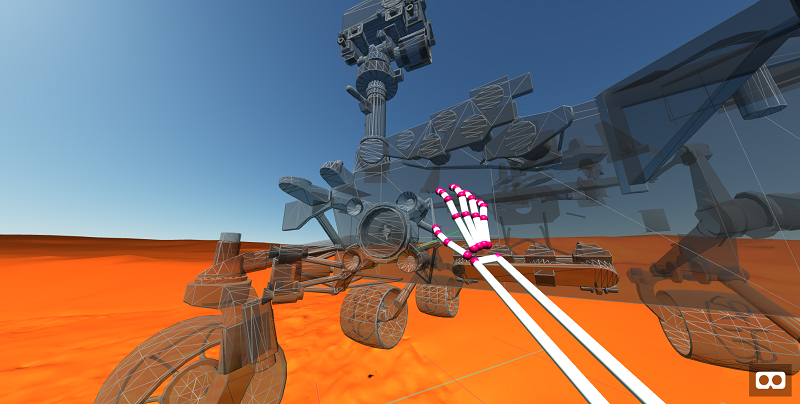
Our work was sampled in a virtual reality prototype. This prototype focused on three main components of the functionality discussed from our Discovery and Design phases.
- Parts on the rover would be selectable, allowing the user to use ray casting in order to grab parts. This would display additional information and the part's status.
- The surface of Mars would also be selectable using ray casting in order to see or learn more about what the rover has learned there.
- Grabbing the sky would allow the user to slide through time, either into the past to see what the rover had done or forward to see what is scheduled for the future.
Development of our prototype was done in A-Frame and using the HTC Vive. While there are a number of factors to consider when designing for virtual reality, such as user wear and inner ear imbalances, we decided to center the user on the rover itself with minimal distances to travel. Because I am not an experienced coder, I built assets for the team developer and prepared for the open house.
Video
The team designed a video demonstrating some of the functionality of our interface. Final editing and effects were done by a team member, but all members had input.
Awards and Recognition
The work that our team did resulted in some recognition from outside the program that is worth mentioning.
Internship
The most exciting of the recognition our team received, at least for me, was that I was selected to intern with JPL over the summer. My experiences there are covered in the section NASA Jet Propulsion Laboratory.
Donor Cards
During the planning portion of our capstone project we applied for and received College of Engineering funds. From here, we were interviewed and selected to be on the donor cards that were mailed in spring 2018. Over fifty thousand cards were sent out, and each included an image and paragraph discussing our project.
JPL Visit
The work done over our two quarters working with JPL impressed them enough they paid for us to visit their facility. During this visit we presented summaries of our findings, demonstrated our project, and toured the facility.